

Apple Vision Pro: Is This The Future Of Wearables?

I've been an Apple computer user since the mid-2000s. Before that, I dabbled with PCs and Linux, but I can't imagine straying from my MacBook Pro these days. Still, I wouldn't call myself a diehard Apple devotee. I'm firmly in Google's camp regarding my phone, smartwatch, and work setup.
So, when Apple unveiled the Vision Pro (AVP), I was intrigued but skeptical. It sounded incredible; I even knew a few people who I think had worked on the technology. However, the high price tag made it a non-starter for me. Over the past few months, I kept hearing rave reviews from friends, and the use cases people described were genuinely compelling. I decided to take the plunge since I already use an Apple Card (thanks to my kids and their Apple devices). I could return it if it didn't live up to the hype.
My previous experience with VR was limited to a few nausea-inducing headsets and a brief encounter with the Magic Leap. The AVP, however, is in a different league. It's sleek, comfortable, and feels like a glimpse into the future of wearable computing. While the current price puts it out of reach for most, I suspect many of its features will trickle down to more affordable devices in the years to come.
The most obvious use case is entertainment. Imagine a TV screen that fills your entire field of view – a 100-inch screen is nothing! The image quality is stunning, and the 3D content is incredibly immersive. The built-in Dinosaur Experience is a mind-blowing example of what's possible. While I was awestruck, I'm not sure this would be my primary use for the AVP. One of my friends bought it instead of a new TV, which makes sense for some.
I also stumbled upon a surprisingly calming feature: a built-in guided meditation app. It displays a pulsating orb that syncs with your breathing, creating a mesmerizing experience. Daily meditation is something I've always wanted to incorporate into my routine, and this might be something worth exploring more.
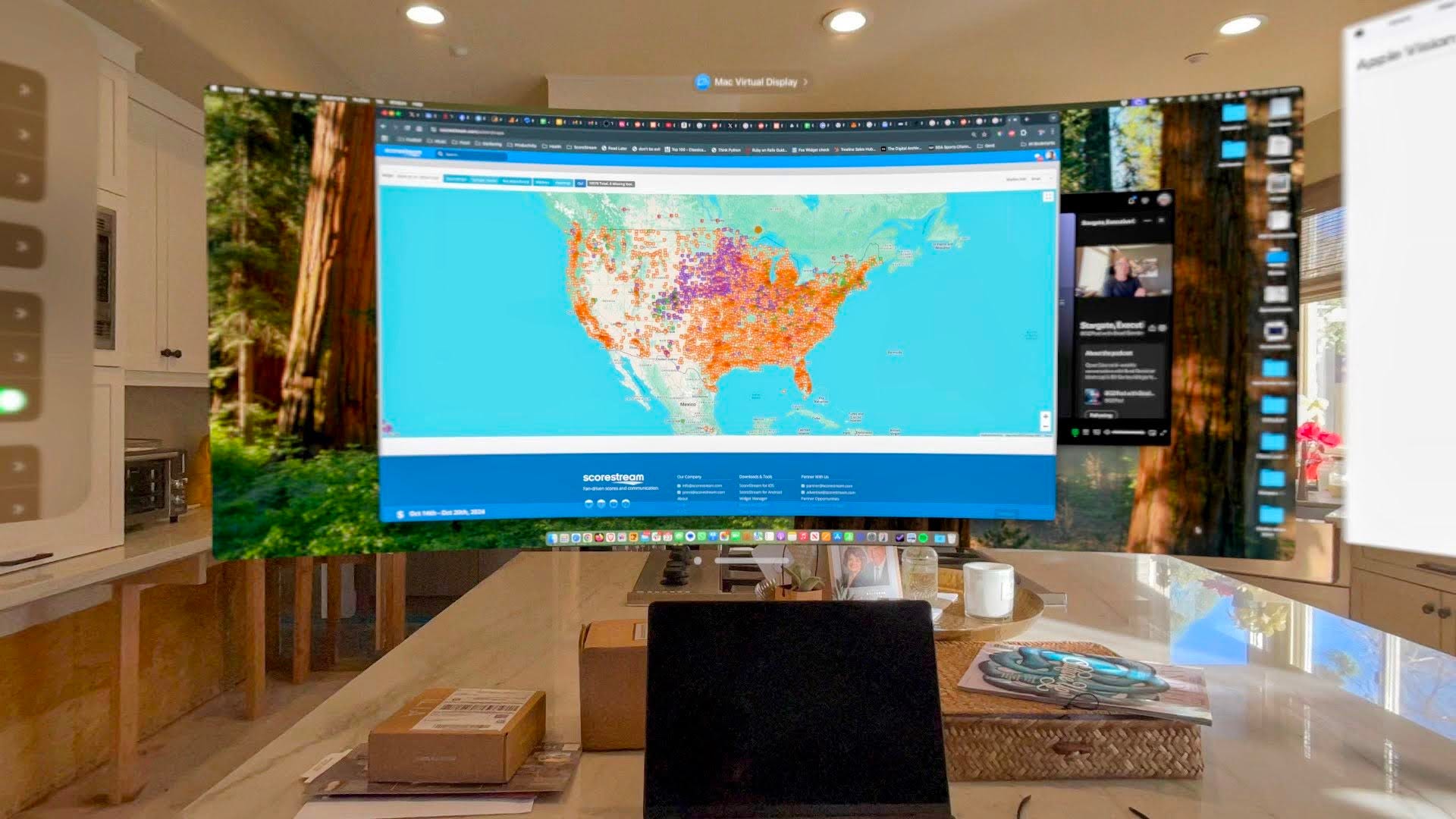
But what excited me was the AVP's potential for productivity. At home, I use three screens for work, and it's always a struggle to adjust to a single laptop screen when I travel. The AVP's screen mirroring is a game-changer. I can create a virtual workspace with a massive display that wraps around my head! Unfortunately, I haven't quite figured out how to use it comfortably with my reading glasses. I must experiment with font sizes and custom inserts for the AVP. While the promise is there, I'm not quite productive yet. On the plus side, my favorite productivity app, Omnofocus, is supported, which is a nice touch.
I haven't explored Zoom or iMessage extensively other than creating my "Persona" and frightening my daughter with a somewhat zombie-like video call. I will give it a go on a Zoom call or two this week and see what kind of response I get.
Speaking of my daughter, she had a chance to try the AVP this weekend, and her reaction was priceless. As an aspiring filmmaker, she was blown away by the creative possibilities. I'm sure I'll continue to explore the device and hopefully uncover more "aha" moments. With much travel coming up, I anticipate engaging experiences on planes and in hotel rooms as I put it through its paces.
Many of the AVP's features will eventually become commonplace in consumer tech. Currently, the AVP shows a very high end in the consumer market, and the Meta Ray Bans show a huge market opportunity. There is much room in the middle, and folks like Google are pushing their own XR initiatives that sound much like the AVP. In that case, we're looking for exciting innovations in the coming years, focusing on practical applications and accessible price points. I, for one, can't wait to see what the future holds.